

August 27, 2025
A House Alive with Legacy: Tracing the echoes of David, Katherine, and Frances Adler
By: Ellen Williams
Each time I unlock the doors to the Adler Arts Center, I’m reminded that this is no ordinary workplace. For nearly 160 years, this house has carried within its walls a remarkable series of transformations. It began as a modest five-room farmhouse set among the fields, later became the cherished retreat of one of America’s most gifted architects, and today stands as Libertyville’s home for the arts. Everywhere you look, the past seems to linger—Katherine Adler bent over her notebook in the garden, David Adler’s sketches unfurled across a desk, the footsteps of neighbors who have gathered here for generations to learn, create, and celebrate. The story of this house is as layered as its plaster and beams, and each time I step inside, I feel both the weight of its history and the spark of its present life.
David Adler’s own story began in Milwaukee on January 3, 1882. The son of a successful clothing merchant, he grew up surrounded by refinement but also by an awareness of craft and detail. He attended private schools, then Lawrenceville Academy in Massachusetts, before moving on to Princeton, where he designed the Charter Club building that still bears his touch. After graduating in 1904, he embarked on travels through Europe that would shape his entire life. He studied at the Polytechnikum in Munich and at the École des Beaux-Arts in Paris, and though his academic career was unremarkable on paper—he never earned an advanced degree—it was in Europe that he honed his eye. He collected postcards of every building that caught his admiration, building a visual archive he would use for decades. His acute memory and natural instinct for proportion served him far better than formal accolades.
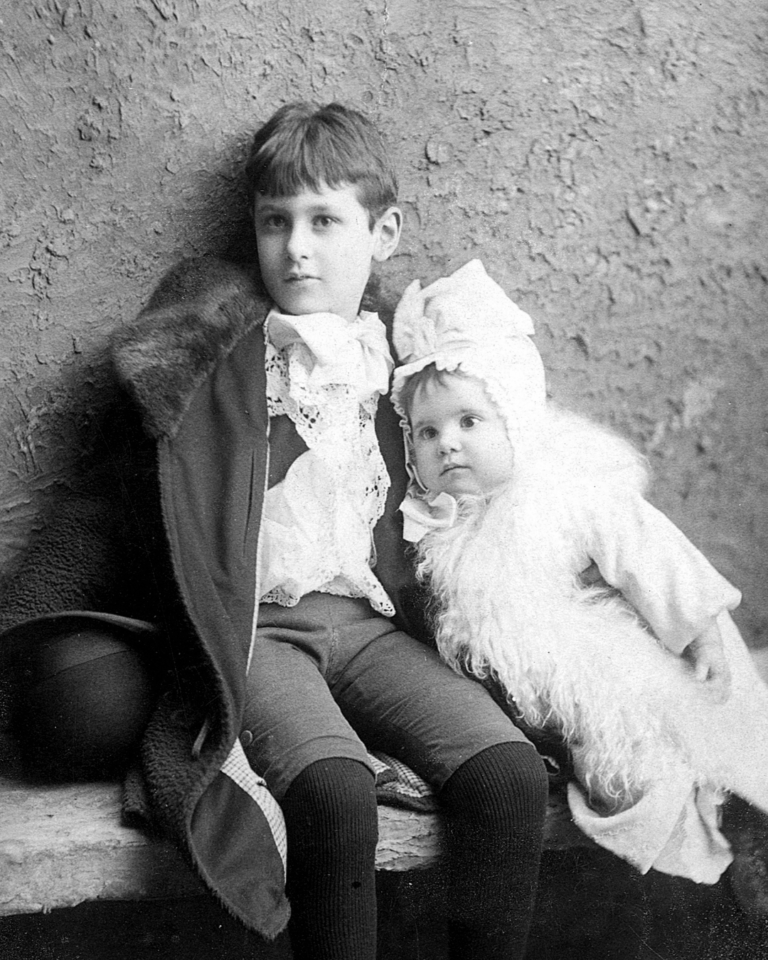
David & Frances Adler
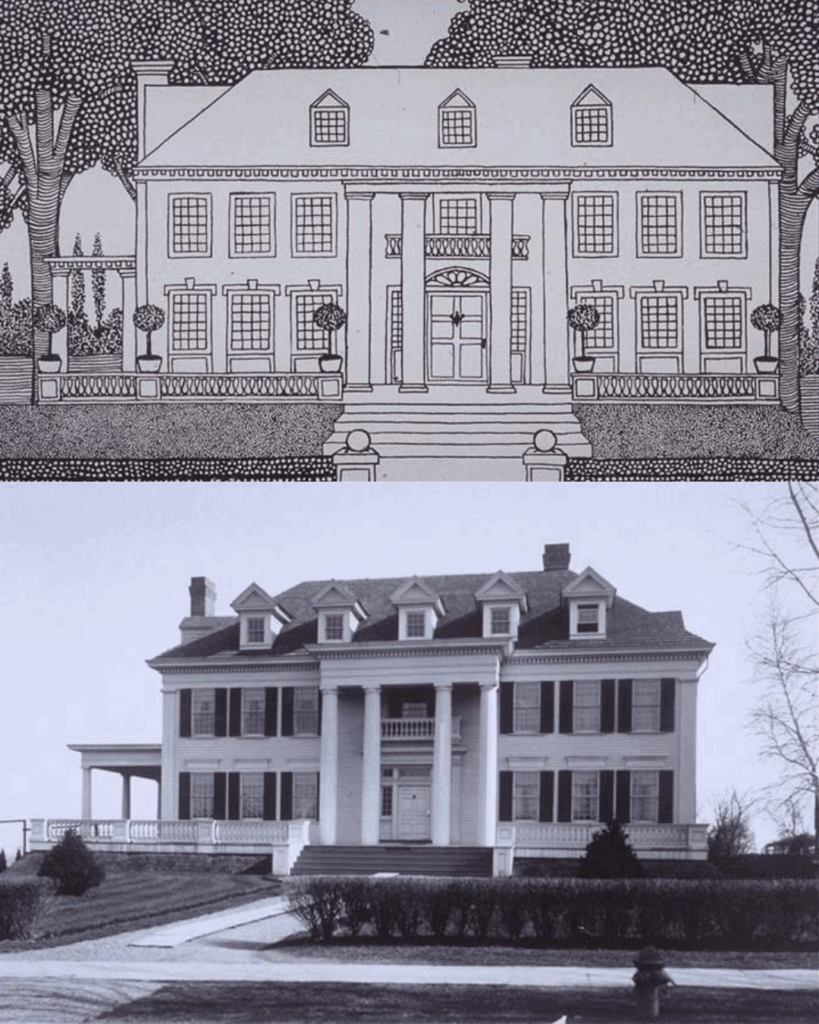
Top: Adler’s sketch in 1905 for Princeton’s Charter Club Bottom: The Charter Club based on Adler’s design
In Paris, he also met Henry Dangler, a fellow architect who would become both his professional partner and a dear friend. Together they returned to Chicago in 1911 and worked briefly under Howard Van Doren Shaw before opening their own practice. Adler’s designs, unusually, were drawn at full scale, 1:1, a testament to his obsession with ornament and accuracy. Clients were quickly captivated by his elegance, and commissions began to flow. When Dangler tragically died in 1917, Adler not only lost a friend but faced professional risk: without a license, he had relied on his partner’s credentials. Twice he failed the licensing exam, once dismissing a technical engineering question with the blunt reply, “I have men in my office who take care of that sort of thing.” Yet by 1929, thanks to his reputation and the support of powerful clients, he was granted his Illinois license, legitimizing a career that had already produced some of the most admired residences in the country.
Amidst this whirlwind of creativity, Adler’s personal life took a joyful turn when he married Katherine Keith of Chicago in 1916. Katherine was a writer, a talented horsewoman, and by all accounts Adler’s great love. He built a gazebo on the estate so that she could sit by the Des Plaines River to write, surrounded by beauty and quiet. Katherine published works like The Crystal Icicle, now preserved at the Cook Memorial Library, and she inspired Adler in countless subtle ways. Their marriage was filled with warmth and partnership, but it was cut heartbreakingly short. In 1930, while the couple was motoring on rain-slicked roads in France, Katherine lost control of their car. She was killed instantly. Adler was uninjured physically, but he never recovered emotionally. He abandoned his townhouse in Chicago and lived full-time in Libertyville, turning their shared bedroom into a study and moving into her dressing room as his own. To honor her, he marked her grave on the estate with a marble obelisk and maintained a daily ritual of walking there, his butler carrying a tray with a decanter and single glass of scotch, where he would toast her memory at the same hour each day.
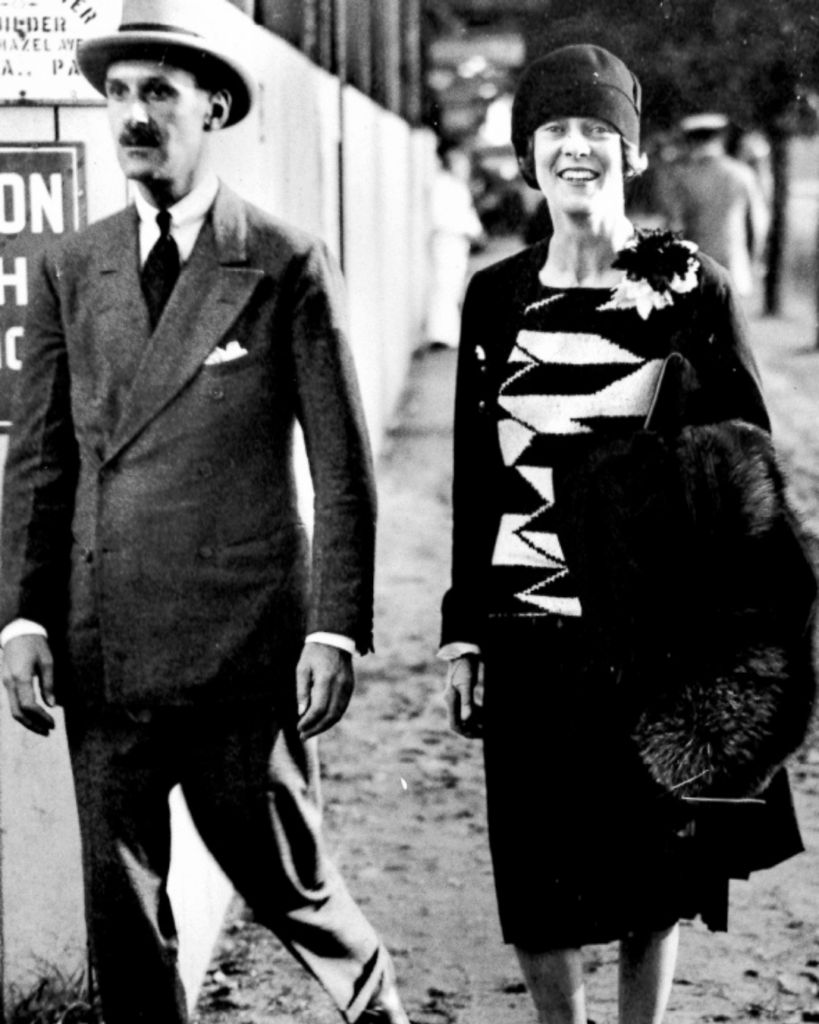
David and Katherine Adler
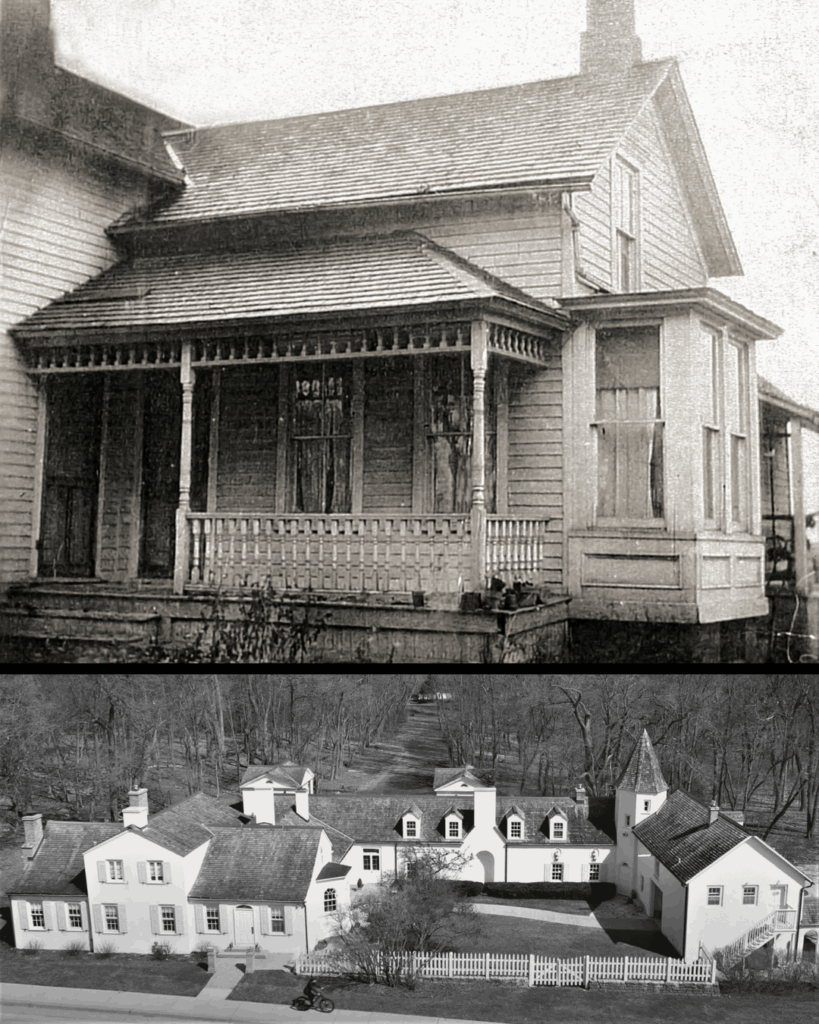
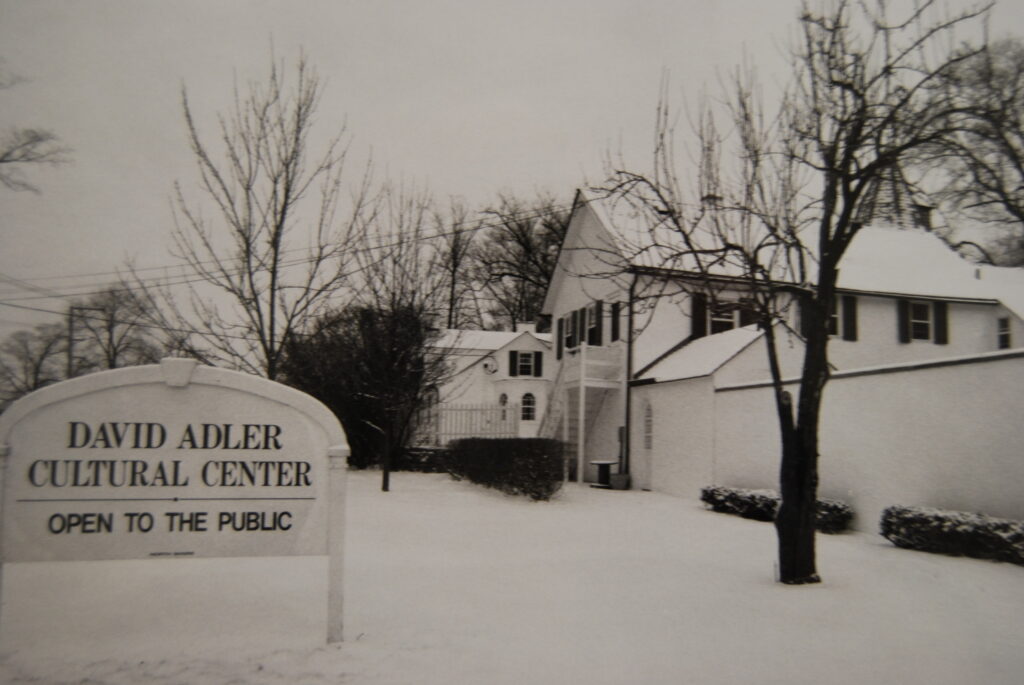
Top: Original 1864 Farmhouse Bottom: Present Day
The Libertyville farmhouse became not just a home, but Adler’s private sanctuary and laboratory. Over more than three decades he expanded it to twenty-three rooms, creating a residence that reflected his eclectic genius. Each space bore his fingerprints: faux finishes on columns, delicate acanthus crown moldings, marble surrounds on fireplaces, symmetry in entrances and staircases. In 1941, he even added an entirely new sitting room with walnut floors in herringbone and faux-painted marble columns, transforming the once-simple farmhouse into an elegant, layered estate.
Through the 1920s and 1930s, Adler was at the height of his power. He designed estates up and down the North Shore, grand country homes for America’s wealthiest families, and even the sprawling Crane Estate in Ipswich, Massachusetts. He was elected to the Board of Trustees at the Art Institute of Chicago, where he became a passionate advocate for decorative arts, often lobbying curators on acquisitions. He mixed his own paints to achieve the exact colors he wanted. He once sought permission to mold copper downspouts at the museum so he could recreate them precisely in a commission. His devotion to authenticity bordered on obsession. And yet, his work was never derivative. He borrowed from history but always created something new, blending Renaissance, Colonial, French, or English styles into designs that felt at once familiar and unique.
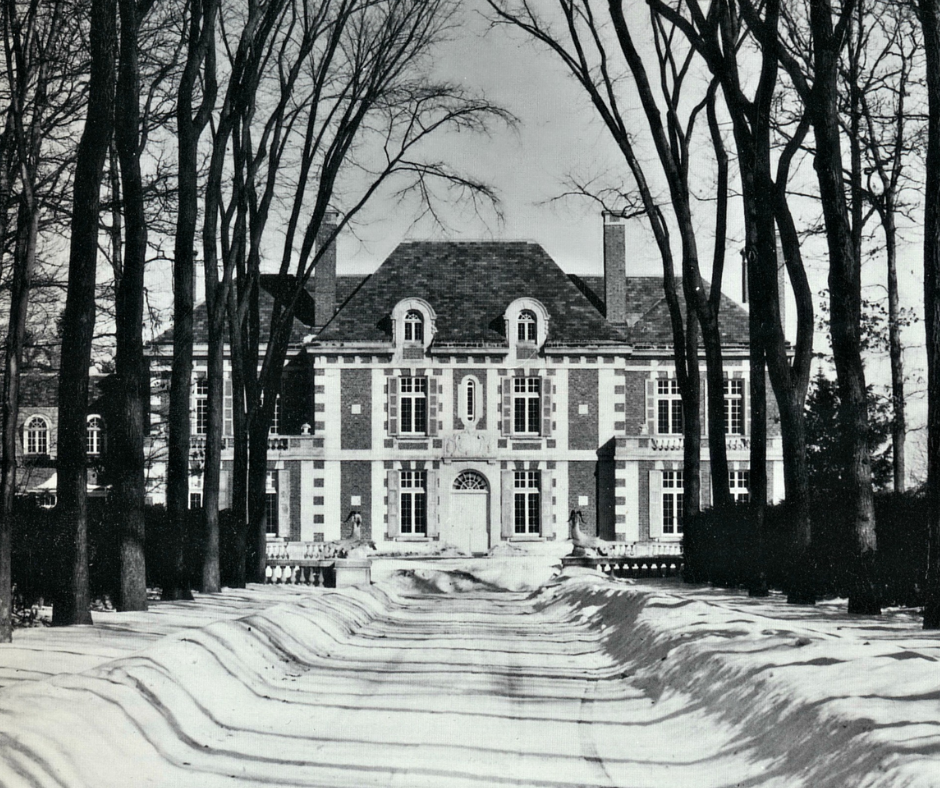
Stonehill Mansion, Glencoe, Illinois, 1911
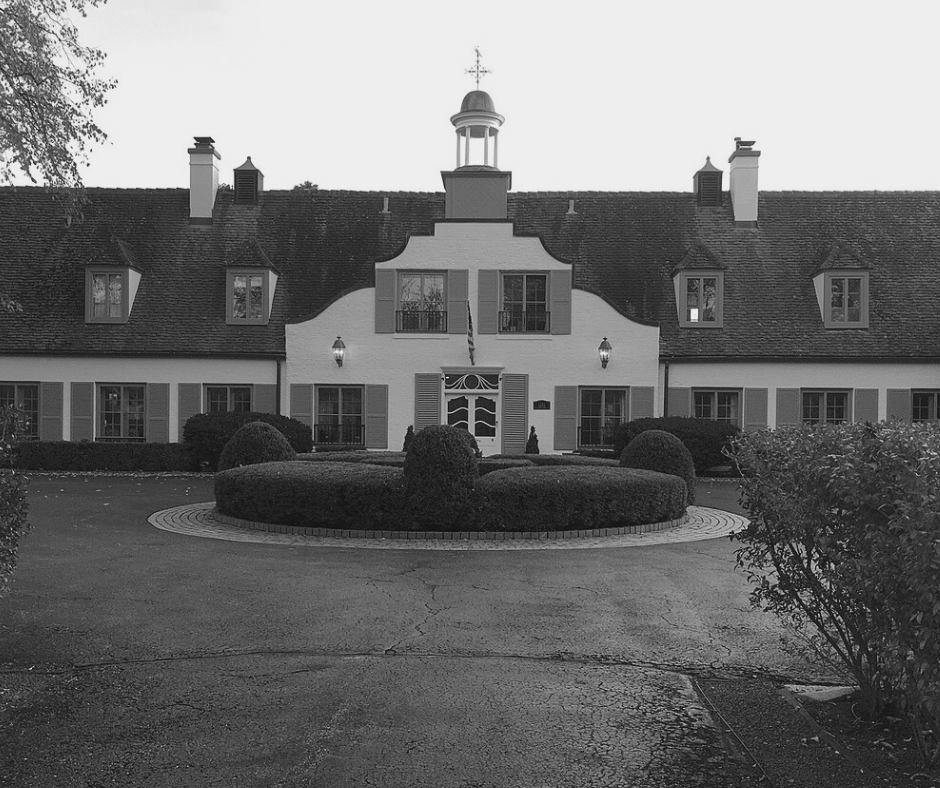
Albert Lasker Estate, Lake Forest, Illinois 1926
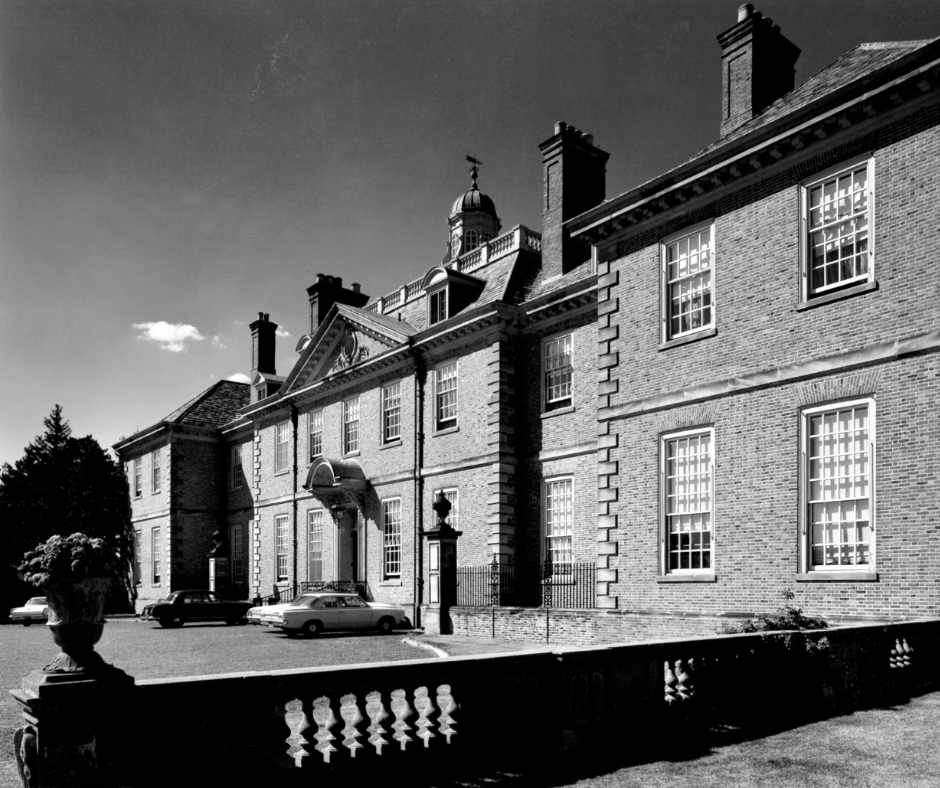
The Crane Estate, Ipswich, Massachusetts 1928
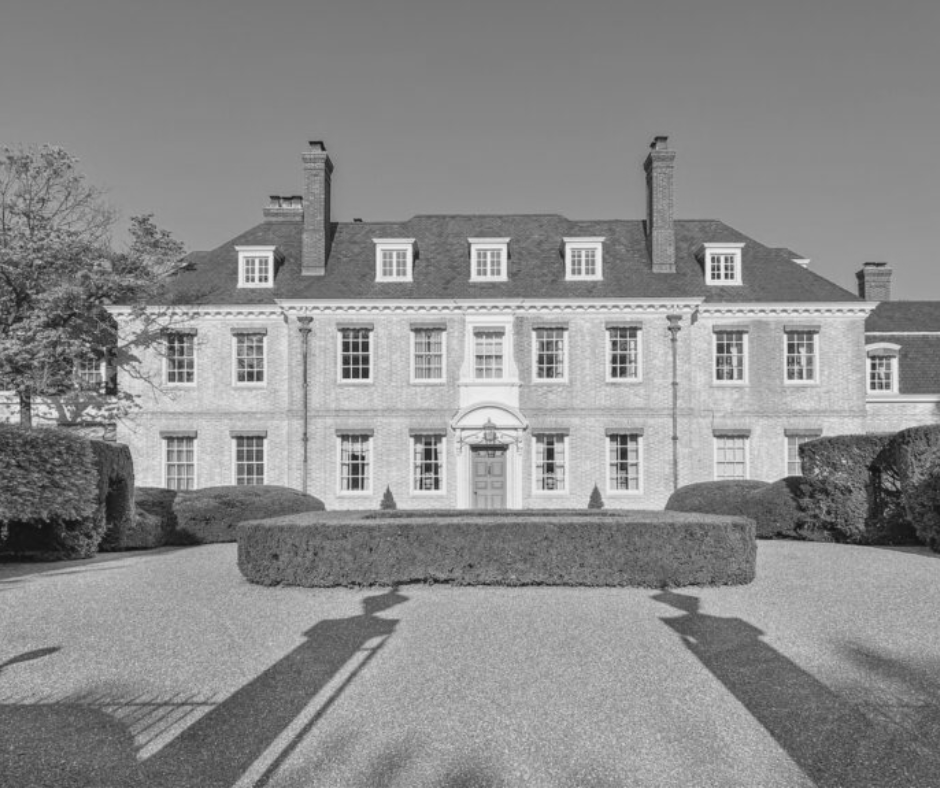
Armour Mansion, Lake Bluff, Illinois 1931
Adler’s life ended as it had unfolded: in his home in Libertyville. In 1949, at the age of 67, just before leaving to visit his sister Frances in Venice, he suffered a fatal heart attack in his sleep. He was laid to rest at Graceland Cemetery in Chicago, beneath the marble obelisk he had once designed for Katherine. In time, Katherine’s ashes were moved from Libertyville to join him there, and together they remain, side by side.
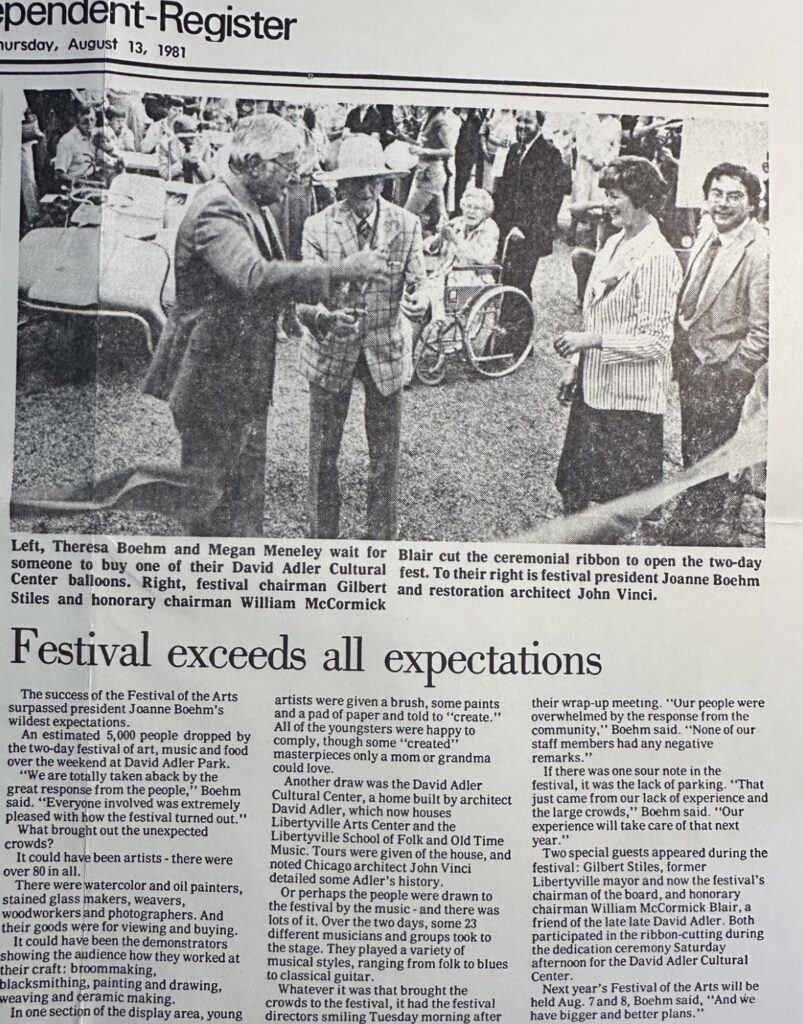
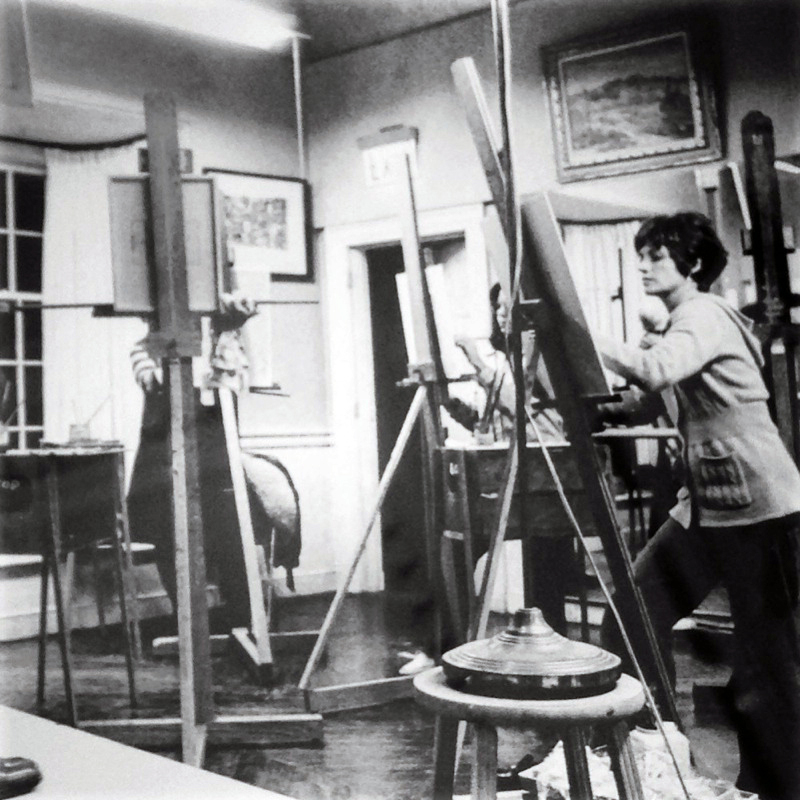
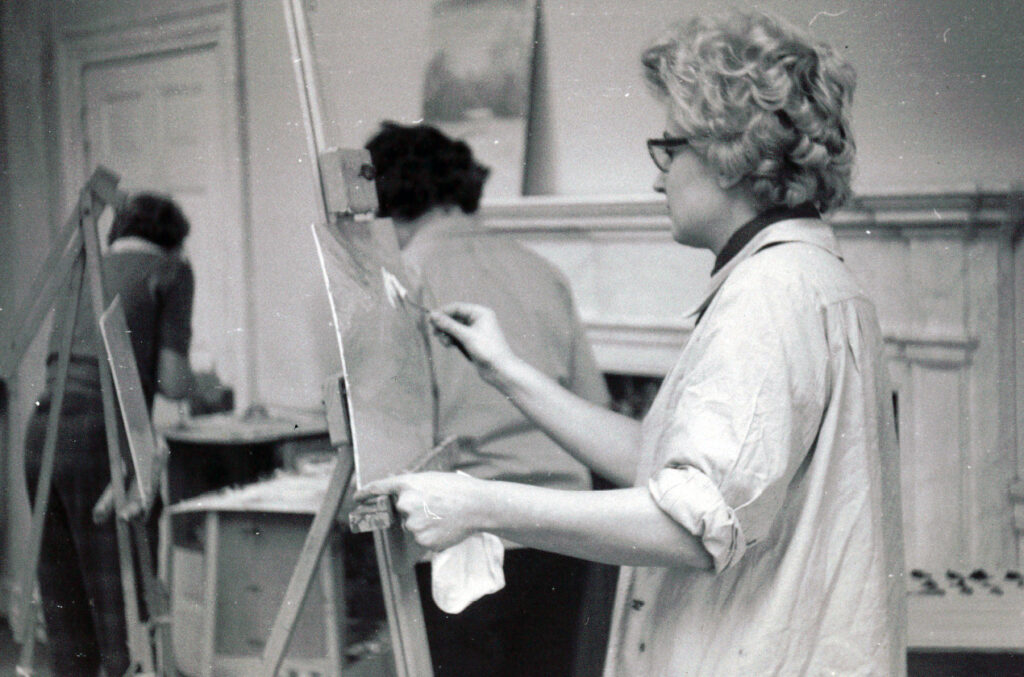
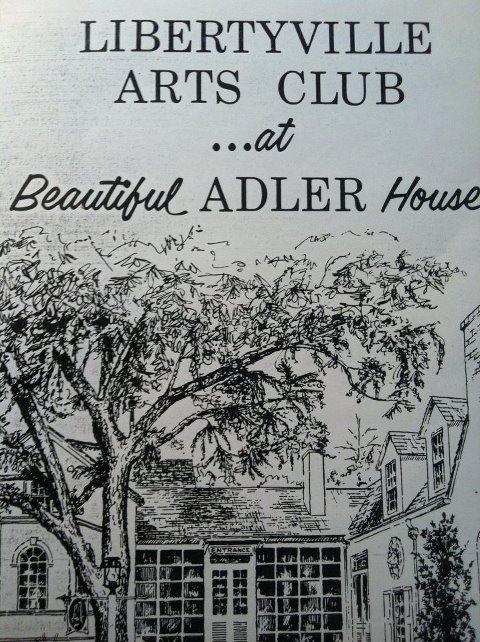
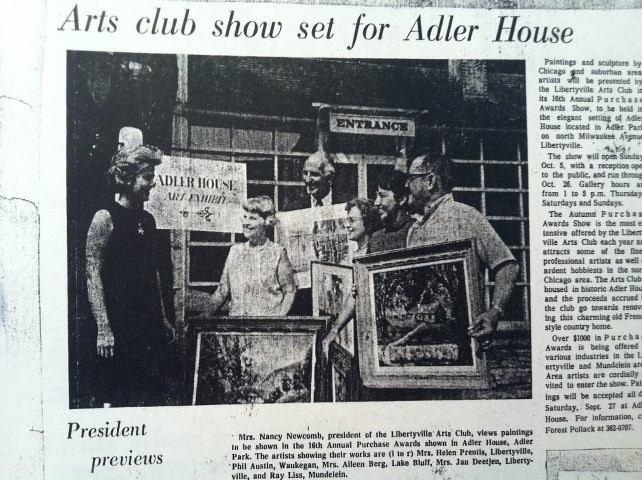
After his death, the estate passed to Frances Adler Elkins, his only sister and one of the most celebrated interior designers of her time. Frances had built her own career in Monterey, California, developing a reputation for bold combinations of traditional European furnishings with modernist elements. She worked on projects across the country, including collaborations with her brother. Though she lived far from Libertyville, she understood the significance of preserving his legacy. With the help of William McCormick Blair, she arranged to offer the estate to the Village of Libertyville. At first, the gift was rejected, but by 1951 the land was accepted and soon transferred to the newly formed David Adler Memorial Park Association. The farmhouse and eleven surrounding acres remained in Frances’s hands until her death in 1953, after which the Village purchased them as well. By the late 1950s, the house was already being used by the Libertyville Arts Club for classes and exhibitions, laying the foundation for what would become the Adler Arts Center.
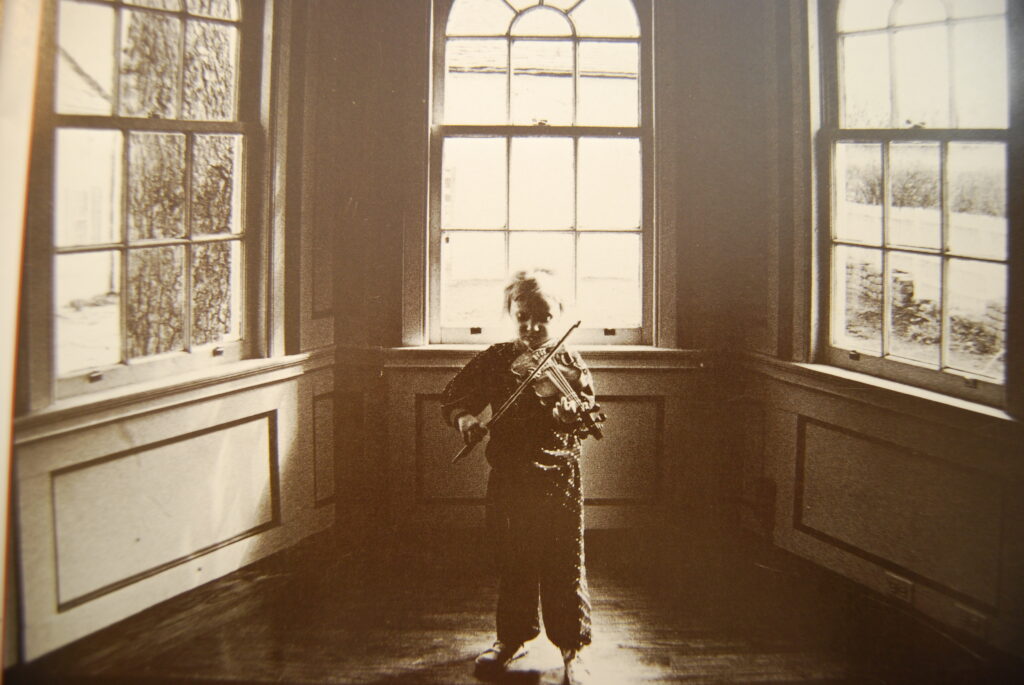
It is a remarkable arc: from a farmhouse built before the Civil War, to a sanctuary for one of America’s most talented architects, to a community arts hub that continues to thrive more than seventy years later. Each generation has added its layer. Each family, artist, child, and neighbor who walks through the door leaves a trace. When I hear violins in the ballroom, or see children discovering paint in a classroom, or watch neighbors gather and tell stories on the lawn or in the parking lot, I think of David, Katherine, and Frances—of their vision, their artistry, and their care.
The Adler Arts Center is not simply a historic site, nor merely a venue for classes and concerts. It is a place where history and creativity live together. To visit is to step into a legacy shaped by a family devoted to beauty, art, and community. And to belong here is to become part of that story, continuing the work they began: creating spaces where art is not separate from daily life, but deeply, inseparably woven into it.
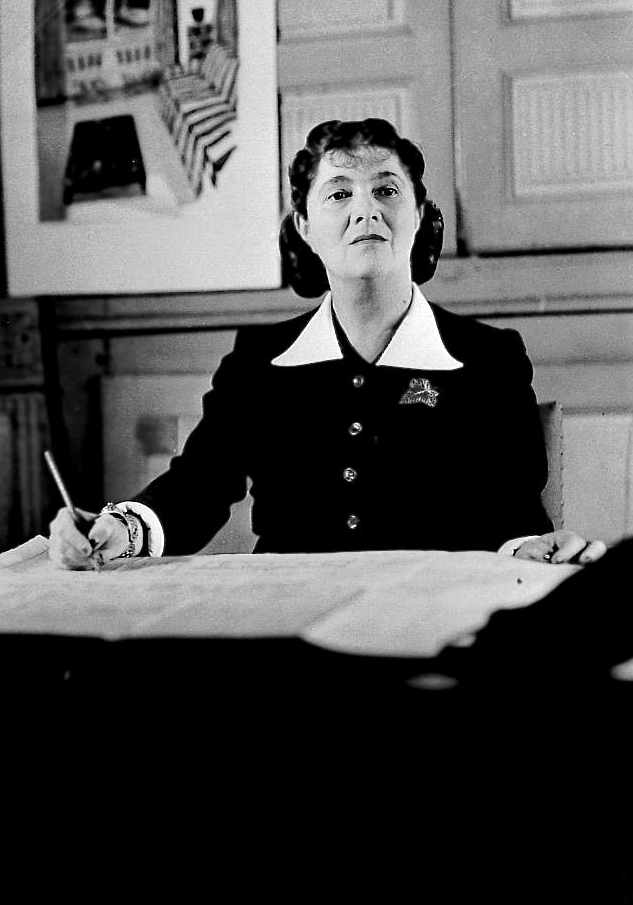
Frances Adler Elkins
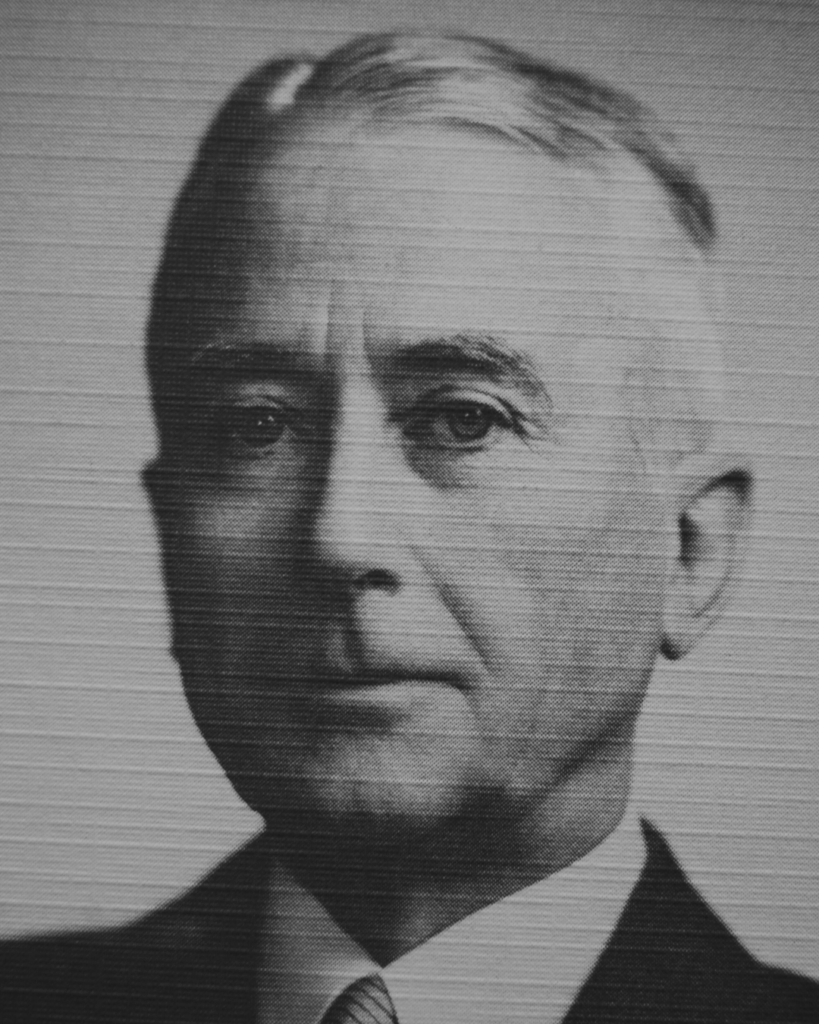
William McCormick Blair
Sources
Benjamin, Susan. National Register of Historic Places Registration Form: Adler, David, Estate.
Libertyville, Illinois. 5 October 1999.
History of David Adler Cultural Center. David Adler Cultural Center, circa 1980.
Stroller, Ezra. David Adler. With photos. New York: Lippincott, 1969.
Powell, Scott. Frances Elkins: Visionary American Designer. New York: Rizzoli, 2023.
Pratt, Richard. David Adler: The Architect and His Work. New York: M. Evans and Co., 1970.